Landscape Lighting Orange County: Appeal After Dark
Orange County evenings have their own rhythm. Marine air drifts up from the coast, palm fronds whisper over stucco walls, and stone walkways hold the day’s warmth. When outdoor lighting is designed well, a yard that looked fine at noon becomes a place you want to linger. You see scale, texture, and movement that daylight flattens. Paths feel safe, entryways feel welcoming, and the property gains a nighttime identity rather than disappearing into the dark.
I have spent years walking properties at dusk with homeowners who thought they only needed a few path lights. By the end of those visits, we were talking about how to reveal a coral tree’s branching, how to graze a stacked-stone wall without glare, how to downlight a dining terrace so faces are lit warmly and plates are visible. Good landscape lighting is craft, and in Orange County it also has to stand up to salt air, irrigation overspray, and long summer nights when systems run for hours.
What light actually does in a landscape
The first thing I explain on site is that fixtures do not matter until you understand how light behaves. Beam angle, color temperature, and color rendering are the quiet workhorses.

Narrow beams create drama. Aim a 10 to 15 degree spot at a tall Italian cypress in Newport Coast and the eye goes straight up the column. Wider beams in the 36 to 60 degree range are better for palms and large facades, where a tight spot would create hot spots and dead patches. For paths and beds, a broad, soft pool without a sharp edge feels natural and helps with depth perception as you walk.
Color temperature sets mood. In residential settings around Orange County, 2700 K is the default because it reads as warm candlelight. It flatters skin tones when people gather outdoors and keeps whites from looking sterile. Move to 3000 K if you want succulents, gravel, and modern hardscape to read a little crisper. For coastal homes with bleached wood and white plaster, I only push toward 3500 K on very contemporary designs. Anything higher can look commercial under the night sky.
Color rendering index matters when you care how plants and stone read. Look for LEDs with CRI above 80, ideally above 90 for dining areas and architectural accents. A blue agave lit by a low-CRI lamp looks dull and gray. Swap in a high-CRI source and you get the glaucous blue-green back, along with the subtle burgundy at the tips.
Voltage also matters, even if you never see it. Most residential landscape systems use 12-volt low voltage wiring with a transformer that steps down from 120 volts. The advantage is safety, flexibility, and efficiency with LED fixtures. For very large estates in San Juan Capistrano or Coto de Caza, a 120-volt run may feed a distant transformer hub, but the field fixtures still run low voltage for simplicity. Low voltage lets us tuck lines shallowly in beds and snake around roots, and it opens up a world of compact fixtures that can hide in plantings.
Design moves that work in Orange County
Design is where the system succeeds or fails. Orange County landscapes come in certain patterns, https://reidovqs411.scriblorax.com/posts/new-building-electrical-professional-orange-county and each pattern calls for specific moves.
Coastal properties deal with marine layer and wind. Salty air finds weak fixtures and corrodes them fast, so we use solid brass or copper where possible. Powder-coated aluminum can work inland, but it pits and peels at the beach. On a Balboa Peninsula home we lit three king palms and a front wall. The original system used aluminum uplights and was a mess in two years. We rebuilt with cast brass and tight seals, and it has pushed past five years with nothing more than new o-rings and a little cleaning.
Hillside homes see light from above and below. In Laguna Niguel, a back slope with native plantings wants gentle grazing, not high-intensity spikes of light. Too much brightness on a slope makes the yard feel like a stage. I prefer to moonlight from mature trees using downlights mounted high with glare shields, aiming so the light filters through branches. The effect is slow and tranquil, and it reduces glare to neighbors below. When families ask why not more uplights, I walk them down the hill and show them how a neighbor’s unshielded fixtures punch the retina. That’s a lesson that sticks.
Tract homes with stucco walls and poured concrete walks often suffer from one-note builder lighting. Swap those bright cool-white floods for layered light. Use a few path lights for safety where grade changes or planters push into walkways, then wash walls to create backdrop, then accent a few trees. If a yard has only two or three specimens worth highlighting, be honest about that. Lighting everything evenly is a fast way to make a yard look flat and smaller than it is.
Dark-sky thinking helps even in populated areas. You do not need to light the sky to make a space glow. Shield fixtures so you cannot see the source from common vantage points. Aim beams so they stop at the target. Use lower lumen outputs and more fixtures rather than blasting with a few powerful ones. And keep color temperatures warm, which is easier on the eye at night. Orange County is not rural desert, but neighbors and HOAs do notice glare and spill. A thoughtful layout avoids complaints.
Controls that make systems effortless
The most beautiful design will frustrate you if the control strategy is clumsy. Plug-in photocells tied to a transformer work but fail more than I like, especially when fixtures are in shade during the day. I prefer astronomic timers or smart controllers that track sunrise and sunset by location and date. That way, lights come on at the right time year-round without sensor drift.
Smart home wiring in Orange County has grown up. You can integrate landscape lighting zones with a whole-home platform and set scenes. For example, an arrival scene might bring up the driveway, entry, and path zones to 100 percent and hold the rest at 40 percent. A dinner scene could raise the terrace downlights and dim distant accents. Hardwire a few backstops too. When Wi-Fi hiccups, a basic manual override at the transformer or in a weatherproof switch box saves annoyance.
Zoning helps with energy and mood. On a recent job in Yorba Linda we separated path lighting, tree accents, facade wash, and water feature into four zones on a 600-watt multi-tap transformer. The homeowner can run only the path and entry lights late at night and cut power usage in half while still keeping guests safe.
Fixtures and materials that last here
Salt, sun, and irrigation conspire to age outdoor gear fast. Choose materials and construction like you would for a marine environment.
Solid brass and copper not only resist corrosion, they age into a patina that hides dirt and fingerprints. If the look of raw brass bothers you against certain materials, black or bronze finishes are available, and the patina develops under the coating. Stainless steel can do well if it is marine grade and well finished. Cheap thin aluminum looks good on day one and causes headaches by year two. There are exceptions inland where budgets are tight, but I set expectations clearly when a homeowner wants to save short term.
Sealing and drainage make or break a fixture. A great housing with a weak gasket will take on water from lawn sprinklers and fog drip. Look for IP65 or higher for uplights and downlights exposed to weather. Path lights often sit close to soil that stays damp, so a weep path for condensation matters. I see many knockoff fixtures with no proper weep. They fog inside the lens, which scatters light and kills the crisp shadowing you designed for.
Mounting hardware needs to match the surface. For masonry, use stainless concrete anchors and a backing plate. For trees, use stainless lag bolts and spacers so the fixture stands off the bark, allowing growth and airflow. Check annually and loosen as needed so the tree does not swallow hardware. Zip ties and screws into thin bark are a short path to dead cambium and fallen lights.
LED modules are not all equal. Swappable MR16 LED lamps work well in many fixtures and make future service simple. Integrated LED fixtures can offer better thermal design and longer life if built well, but if the board fails you replace the whole head. On coastal jobs, I like MR16-based fixtures with high-CRI lamps from reputable brands. The transformer sits on a wall, the lamp swaps in minutes, and you can adjust lumen output by choosing wattage from 3 to 7 watts per head depending on the target.
Power and wiring, done right
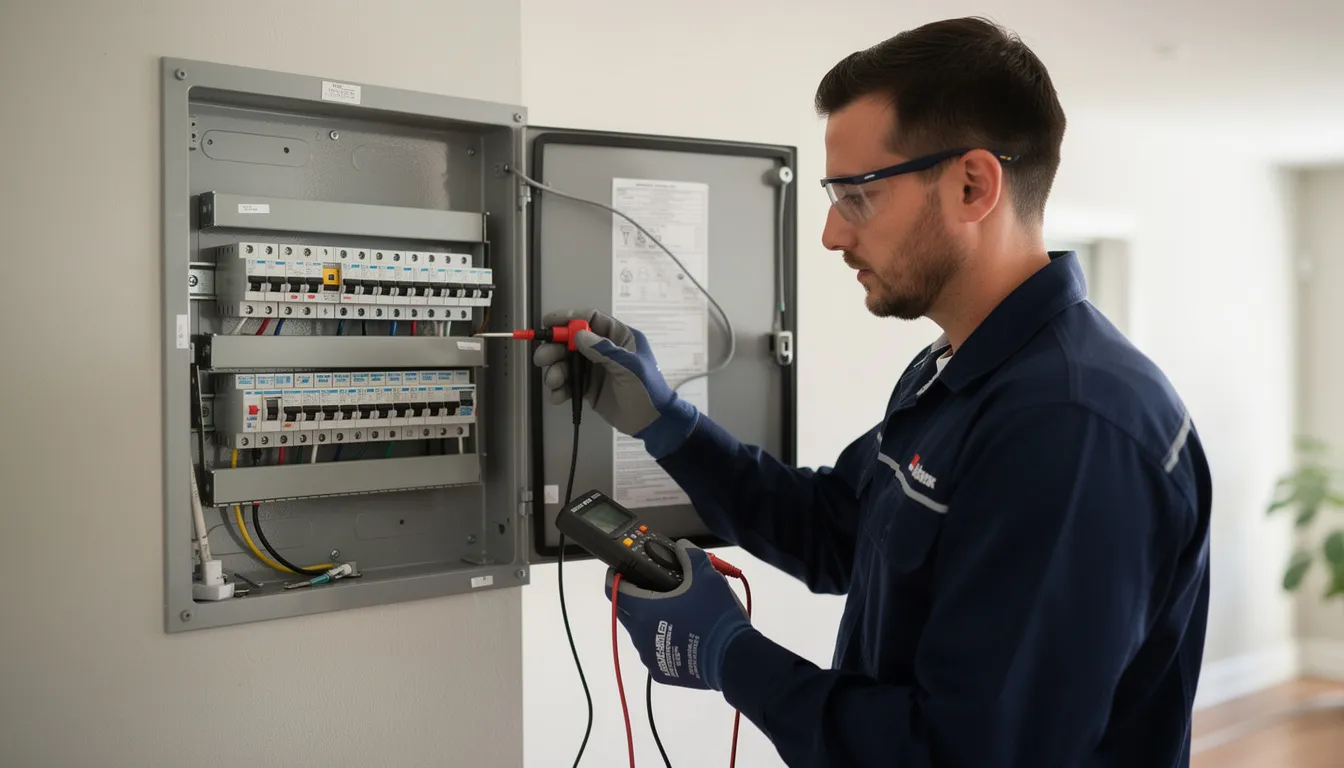
This is where the work of a licensed electrician in Orange County shows. A system can look decent on night one, then fade and fail because voltage drop was ignored, splices wicked in water, or the transformer was overloaded.
Transformer sizing is basic math with some field sense. Add the wattage of all fixtures on a run and give yourself a 20 to 30 percent buffer. If a zone totals 180 watts of LED load, a 300-watt transformer is comfortable and runs cool, which extends life. For larger estates with multiple zones, a 600 or 900-watt multi-tap transformer allows longer runs by providing 13 to 15-volt taps to compensate for drop. Multi-tap does not mean you should run everything on 15 volts. It means you measure at the farthest fixture and choose the tap that yields 11 to 12 volts at the lamp under load.
Wire gauge should match the run length and load. For short runs under 50 feet with under 100 watts, 14 AWG is fine. Push to 12 AWG or even 10 AWG when distance and load increase. The mistake I see is one long daisy chain with dozens of fixtures at the far end that starve for voltage, so those heads look dim and yellow. Hub or T-method wiring helps. Create a central junction in the zone, run equal-length leads to small groups of fixtures, and balance the load. It is a little more trenching, and it pays back every night for years.
Splices must be waterproof and mechanical, not twisted with tape. Use gel-filled or heat-shrink connectors rated for direct burial. I have dug up too many green-tinted copper twists that looked fine at install and failed after a season of irrigation overspray. And think about physical protection. Where wire crosses a walkway or driveway, sleeve it in PVC or flexible conduit.
Keep line voltage safe. If you need a new outdoor GFCI-protected receptacle for a transformer, have a residential electrician in Orange County install it to code with an in-use cover. If the garage circuit is overloaded and trips when you add an EV charger and outdoor transformer, you may need an electrical panel upgrade in Orange County or a subpanel to create capacity. I have been on jobs where an EV charger installation in Orange County went in beautifully, then the transformer install uncovered that the main panel was maxed out. An Orange County electrical contractor who can see the whole picture avoids surprises.
Code, safety, and the stuff you do not see
The California Electrical Code governs what we can do outdoors, and inspectors in different cities focus on different details. A few nonnegotiables:
Keep fixtures at safe distances from pools and spas unless you use special low-voltage pool-rated equipment. Bond any metal within the required distance to the pool’s bonding grid. If you are crossing a public sidewalk to light a median or parkway tree, you will likely need permits, and the city will require conduit depth and colored pull tape to mark the run.
Use GFCI protection for any 120-volt circuit serving outdoor gear. If you are uncertain whether an old receptacle is GFCI-protected upstream, schedule an electrical inspection in Orange County. It is easier to correct now than after a nuisance trip on a Saturday party night. For any new line-voltage control gear outdoors, weatherproof enclosures and proper fittings are mandatory. I have seen plain NM cable poking out of stucco to feed a transformer. That is not just sloppy, it is a hazard.
Call 811 before you dig more than a few inches, even for low voltage wiring in Orange County. Sprinkler lines, shallow utilities, and fiber run surprisingly close to grade. A careful electrician near you in Orange County will probe, hand-dig, and avoid cutting the irrigation main the day before your event. Yes, I learned that one early in my career and still carry extra couplings because of it.
Three real-world examples
A compact Corona del Mar lot, 45 by 90 feet, with mature olives and white plaster walls. We used eight 3-watt MR16 uplights at 2700 K with 36-degree beams to sculpt the olives, four wall wash fixtures at 3000 K to pull texture from the plaster, and six low glare path lights along a limestone walk. One downlight on a second-story eave moonlit the dining table. Total LED load was roughly 60 watts, controlled by an astronomic timer. The homeowner had lived with two floodlights that made the space harsh. The new system felt intimate, and power draw dropped by over 80 percent.
A Laguna Beach hillside home with a steep native slope. We avoided uplighting the slope entirely. Instead we placed three copper downlights high in two pines and one eucalyptus, angled to wash across the slope with dappled movement. Around the terrace, we set four petite brass fixtures to graze a stacked-stone seat wall. An older aluminum system had corroded into pieces in four years. The new one used solid brass and stainless hardware, sealed wire nuts, and drip loops at every head. We built zones so the slope could go off at 9 p.m. While the terrace stayed lit. The neighbors who once grumbled about glare later asked who did the work.
A Yorba Linda ranch with a long driveway and a new electric vehicle charger. The homeowner’s main panel was an older 125-amp unit with every breaker filled. The EV installer had used a load management device to squeeze in the electric vehicle charger in Orange County, but there was no room for new outdoor circuits. We combined needs. Our crew did a panel replacement in Orange County with a modern 200-amp load center, added a dedicated GFCI-protected circuit for two landscape transformers, and installed a whole home surge protector. The yard lighting used two 300-watt multi-tap transformers, 12-gauge trunk lines, and four balanced hubs. The system measured between 11.2 and 11.8 volts at all fixtures under load. Now the EV charges, the yard looks elegant, and nuisance trips are gone.
Energy use and maintenance
LED changed the game. A halogen-based yard with 25 uplights at 20 watts each burned 500 watts before path or wash lights. The same visual effect with good LEDs might use 100 to 150 watts total. Over a year, at 4 to 6 hours a night, that is real money. It also reduces heat on plants and fixtures, and it allows smaller transformers that run cooler.
Maintenance is not glamorous, and it is the reason many systems look tired after two years. Lenses collect dust and hard water spots, which reduce output and flatten contrast. In Orange County we see irrigation overspray that leaves mineral rings on lenses. A soft wipe with a vinegar solution removes deposits. Spiders love warm lenses, so cobwebs appear. A once or twice yearly cleaning resets everything. While you are there, trim plant growth that is blocking light or causing glare, tighten stakes that have loosened in wet soil, and check aiming after Santa Ana winds.
Expect LED modules to last 25,000 to 50,000 hours depending on quality and thermal management. That is 10 to 15 years at typical run times. Drivers and gaskets will fail before LEDs do. Keep a few spare lamps and o-rings on hand. If a zone goes dark, start with the transformer output, then check the first splice on the run for a failed connection.
Integrating outdoor lighting with the rest of your electrical plan
Outdoor lighting rarely lives alone. It ties into a broader electrical picture that includes an EV charger, a spa, exterior receptacles for parties, maybe a standby generator if you live up the canyon where outages run longer.
If your electrical panel is already near capacity, outdoor loads may push it over the edge. An electrical panel upgrade in Orange County is not a sales pitch, it is often the right move if you have layered on a kitchen remodel, air conditioning, and an EV over the years. A top rated electrician in Orange County will do a load calculation, weigh your habits, and tell you whether a subpanel or full panel replacement makes sense. During that work, we can add a dedicated outdoor circuit with a weatherproof shutoff, label it clearly, and provide space for future zones.
If you entertain a lot, installing extra outdoor receptacles tied to GFCI protection keeps extension cords to a minimum and reduces risk. Consider a generator installation in Orange County if safe egress lighting matters during outages. Even a small standby unit can keep path and entry lights, refrigeration, and the EV charger alive so your routines do not collapse the minute power drops. Not everyone needs this, but families in older neighborhoods with overhead lines ask for it often enough that it merits a conversation.
Smart home wiring can marry outdoor zones with indoor scenes. If you have existing low voltage wiring from an old system, we can test insulation and reuse it when sound. If we are trenching anyway, it may be time to add conduit for future low-voltage runs or even fiber between structures. A local electrician in Orange County who does both landscape lighting and interior work saves you from having to translate between trades.
What a skilled electrician brings to the project
There is a difference between a nice idea sketched at the kitchen table and a system that looks perfect every night for a decade. Hiring a licensed electrician in Orange County who understands lighting is less about paperwork and more about judgment at small decision points. We know when a 3000 K lamp will fight with your limestone, when a 15-degree spot will blow out the crown of a palm, when the GFCI location will cause nuisance trips, when to specify brass instead of aluminum, and how to route cable so the gardener’s spade never finds it.
Sometimes, you need speed. If a car takes out your entry pillar and the lights go with it the day before a graduation party, an emergency electrician in Orange County can stabilize the circuit, provide temporary lighting, and return for a permanent fix. A 24 hour electrician in Orange County does not just put you on a list, they show up when the problem is live. When budgets are tight, an affordable electrician in Orange County can phase a project so you get the core path and entry lights now and the tree accents later, without burying you in rework costs.
Search results for electrician near me in Orange County will spin up long lists. Ask about low voltage experience, transformer sizing, corrosion control on the coast, and code specifics near water. Good answers come with examples and measured numbers, not just brand names. The best electrician in Orange County for landscape work might be a smaller firm that spends time at dusk dialing in aim. The top rated electrician in Orange County might have dozens of five-star reviews for indoor jobs but light few yards. Fit matters.
Budgeting and realistic costs
Costs vary with yard size, fixture quality, control strategy, and site conditions. Homeowners in tract neighborhoods who want a basic front-yard refresh can expect a system with 8 to 14 fixtures, a single transformer, and a simple timer to start around the mid four figures, more if you choose brass fixtures and premium lamps. A full property, front and back, with 25 to 50 fixtures across multiple zones, astronomic control, and high-CRI LEDs typically lands in the low to mid five figures. If trenching is complex due to hardscape, or if we add a new outdoor circuit from a crowded panel, the electrical work adds accordingly.
Coastal corrosion mitigation adds cost up front and reduces replacement down the line. That bargain kit from a home center might get you through a season, but it is not a fair comparison to a professionally installed system designed for five to ten years of service. When we are honest about these trade-offs, homeowners make better choices, whether that means fewer, better fixtures now or a phased approach.
A short homeowner checklist before you start
- Walk your yard at dusk and night to see how you actually use it, and note where you feel unsafe or blind.
- Pick two or three focal points you love, not ten, and let the rest support them.
- Decide how you want the system to run, from fully automatic astronomic control to app-based scenes.
- Gather info on your panel capacity and major electrical loads so your contractor can plan properly.
- Choose materials like brass or copper if you live within a few miles of the coast, and plan for maintenance.
If something is not right, simple checks before calling for help
- Look at the transformer and verify power, time settings, and that the circuit breaker or GFCI upstream is not tripped.
- If one zone is dark, check the first accessible splice on that run, since a single failed connection often takes the rest out.
- If a few fixtures are dim and amber, measure voltage at the far fixture under load to see if a loose connection or heavy drop is the cause.
- If smart controls do not respond, confirm Wi-Fi coverage and test the manual override to separate control issues from power issues.
Where the craft shows after dark
On a quiet evening in San Clemente, we finished tuning a system for a couple who had lived with floodlights for years. We switched on a scene that set the pepper tree in layered light, washed the stucco softly, and drew a dotted path to the side gate. The homeowner stood still for a long beat, then said the house finally looked the way it felt in their head. That moment is why the details matter. Voltage taps, beam spreads, gaskets, timers, code checks, and neat splices sound technical because they are. They free the eye to enjoy shade and glow and movement without thinking about what made it happen.
If your yard goes dark at sunset, you are missing half of what you built. With thoughtful design, sound wiring, and the right materials for Orange County’s climate, the property will not just be visible after dark. It will be beautiful, and it will feel like home. Whether you need lighting installation in Orange County for a new build, an Orange County electrical repair to rescue a tired system, or a same day electrician in Orange County to get a party ready by Saturday, pair the art with the trade. The results will show every night.